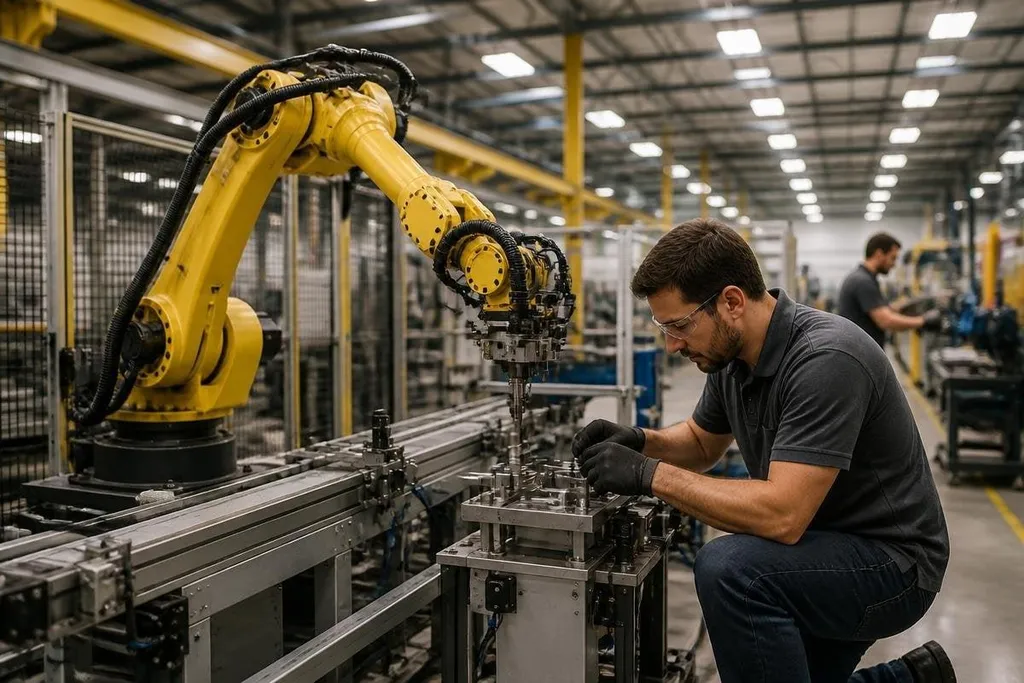
A robot on a factory floor still needs people to install it, check its work, repair it, and decide where it belongs. That creates room for new jobs, while changing older ones around maintenance, software, safety, and training.
- Robot technicians will keep machines running after installation.
- Safety and workflow staff will check how robots affect people and production.
- Trainers and operators will turn robot data into better daily work.
The work changes before the job title does
Robotics rarely removes every task in a role. It changes which parts people do. A worker who once moved parts by hand may spend more time loading a robot, checking its sensors, or fixing a blocked route.
That shift creates demand for people who understand the job and the machine. A warehouse worker who knows where delays happen may become the person who adjusts robot routes or checks why a tote stopped at a station.
The technical side matters too. Robots rely on cameras, force sensors, motors, batteries, and software. When one part fails, someone has to find the cause and put the system back into service.
Jobs that keep robots running
Robot technicians are the clearest example. Their work can include installing equipment, replacing worn parts, checking cables, and testing an arm after repair. The job sits between mechanical work and software support.
Field service technicians may travel between sites. They could inspect a robot after a fault, update its software, or train local staff to handle routine checks. A company buying robots needs this work even when the machines run without a person beside them.
Systems integrators will connect robots to the rest of a site. That may mean linking an arm to a conveyor, setting up a mobile robot’s charging area, or making sure a warehouse system sends the right task to the right machine.
The useful skill is often fault finding. A robot that stops may have a motor problem, a blocked sensor, a software error, or an unsafe position. The person who can separate those causes saves time without guessing.
Jobs near the robot, not inside it
Robotics also needs people who work on the rules around a machine. Safety staff can review stopping distances, emergency controls, access zones, and the tasks people share with robots.
Workflow designers will decide which jobs suit automation and which need human judgment. They may study a production line, move a sensor, change the order of tasks, or leave a manual step in place because the robot cannot handle enough variation.
Training will become another part of the work. Staff need to know how to start a robot, clear a fault, report unsafe behavior, and hand a task back to a person. A short manual cannot cover every problem that appears on a busy shift.
A new job title means little until a company names the robot, task, and site behind it. Robot24.com's robotics industry reporting can supply those details, so you can judge whether the role grew from a working system or a slide deck.
The open question is where the jobs appear
New work may sit with robot makers, factories, hospitals, farms, warehouses, or outside service firms. The location depends on who owns the machines and who handles repairs, software, training, and safety checks.
Some roles may grow inside existing jobs instead of receiving new titles. A nurse may monitor a care robot. A farmer may check an autonomous vehicle. A quality inspector may review images from a robot camera.
The hard part is access to training. A person does not need to become a software engineer to work with robots, but they may need basic skills in sensors, electrical safety, network links, and task setup.
Short courses can help, yet companies still need to make time for practice.
I’d look first at jobs that combine a real work process with basic robot skills, because those roles have a clear reason to exist even when one machine changes.
A practical starting checklist
Use these points when choosing a training path or checking a job listing:
- Find the machine: Learn whether the role involves robot arms, mobile robots, drones, or medical systems.
- Read the task list: Look for setup, repair, inspection, data review, or staff training.
- Check the fault work: Ask who handles sensor errors, blocked paths, software updates, and emergency stops.
- Match your base: Mechanical, electrical, coding, warehouse, care, or farming experience can point to different paths.
- Ask about practice: Check whether the company offers supervised time with the robot before assigning live work.
The safest career bet is a role where the machine has a clear job and a person still owns the result. As robots move into more workplaces, the people who can connect hardware to daily work will have the clearest place to start.